
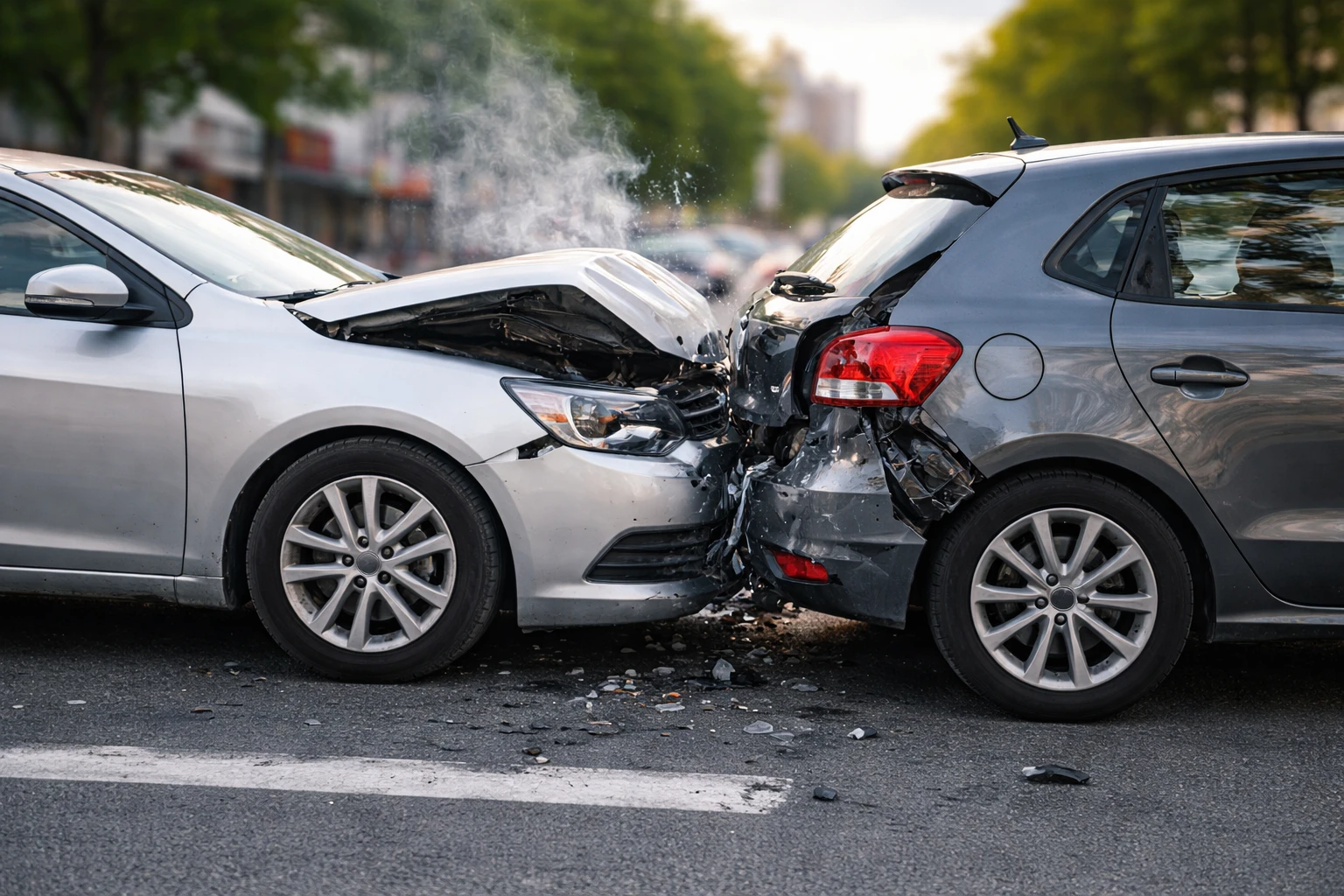
A minor accident. Property damage, no injuries—nothing out of the ordinary. And yet, one crucial question arose in the aftermath: Who was driving – and was that person even authorized to do so?
What initially appears to be a minor detail turns out to be a structural issue. One that is often overlooked in day-to-day business with pool vehicles. Not at the start of the journey, but when something happens.
Pool vehicles: Flexible in use – demanding in terms of documentation
Whether in companies, government agencies, or local authorities, shared vehicles have long been part of everyday life.
They are used flexibly by different people—often without fixed assignment or consistent documentation.
What works in everyday life is often based on routines:
- Keys are passed on informally.
- Agreements replace booking systems.
- Driver's license checks do take place, but they are independent of actual use.
Such habits are convenient, but they make processes prone to errors, gaps in traceability, and even legal risks in serious cases. This is because they rely on trust rather than traceable structures.
Driver's license check: Good intentions are not enough
In many organizations, regular driver's license checks are standard practice. However, they are often not synchronized with the actual use of the vehicle. This means that checks are carried out, but not necessarily at the moment a vehicle is picked up. It often remains unclear who drove when and whether the person was authorized to do so at that time.
As long as everything runs smoothly, this is not noticeable. However, in the event of accidents, audits, or internal reviews, this gap becomes apparent and critical.
The key question in an emergency
How do you ensure that your pool vehicles are only used by authorized drivers
and that this can be verified retrospectively? At this point, it becomes clear that regular driver's license checks alone are not enough.
The key factor is linking authorization and use at the moment the vehicle is picked up.
Typical weaknesses encountered in practice:
- Driver change without clear assignment
- Driver's license check regardless of departure time
- Incomplete or outdated documentation
- Processes based on the informal responsibility of individual employees
The problem lies not in the intention, but in established structures that were never designed for transparency and verifiability.
What really takes the pressure off organizations
No more rules.
No more paper.
Instead: Digital processes that seamlessly link driver assignment, driver's license checks, and vehicle usage.
Relief occurs when:
- The use of a vehicle is only possible with a valid driver's license check.
- the drivers are clearly assigned.
- Documentation is automated, without any additional effort in everyday work.
Pool vehicles in particular demonstrate how robust processes really are—whether they are based on habits or on resilient structures.
Conclusion: The incident was an isolated case. The challenge was not.
Pool vehicles are an organizational and compliance issue, not just a logistical detail. As long as usage and authorization are only checked retrospectively, the process remains vulnerable. Digital solutions make the difference:
- Transparent processes at the moment of use
- clear driver assignment
- automated driver's license check
- reliable evidence in case of emergency
Practical check: How stable are your pool vehicle processes?
Individual cases cannot be planned. Structures can.
- How clearly are drivers and vehicles assigned?
- Is the driver's license check linked to actual use?
- Where are processes still dependent on individuals?
The check only takes a few minutes—with no obligation.
More articles
When individual cases reveal weaknesses – pool vehicles and driver's license checks in everyday life
A minor accident. Property damage, no injuries—nothing out of the ordinary. And yet, in the aftermath, a crucial question arose: [...]

Effective documentation and organization of winter services is crucial in order to increase efficiency and meet legal requirements. [...]

Companies are constantly looking for ways to optimize their processes and reduce costs. One of the most promising technologies to emerge in the [...]
A minor accident. Property damage, no injuries—nothing out of the ordinary. And yet, one crucial question arose in the aftermath: Who was driving – and was that person even authorized to do so?
What initially appears to be a minor detail turns out to be a structural issue. One that is often overlooked in day-to-day business with pool vehicles. Not at the start of the journey, but when something happens.
Pool vehicles: Flexible in use – demanding in terms of documentation
Whether in companies, government agencies, or local authorities, shared vehicles have long been part of everyday life.
They are used flexibly by different people—often without fixed assignment or consistent documentation.
What works in everyday life is often based on routines:
- Keys are passed on informally.
- Agreements replace booking systems.
- Driver's license checks do take place, but they are independent of actual use.
Such habits are convenient, but they make processes prone to errors, gaps in traceability, and even legal risks in serious cases. This is because they rely on trust rather than traceable structures.
Driver's license check: Good intentions are not enough
In many organizations, regular driver's license checks are standard practice. However, they are often not synchronized with the actual use of the vehicle. This means that checks are carried out, but not necessarily at the moment a vehicle is picked up. It often remains unclear who drove when and whether the person was authorized to do so at that time.
As long as everything runs smoothly, this is not noticeable. However, in the event of accidents, audits, or internal reviews, this gap becomes apparent and critical.
The key question in an emergency
How do you ensure that your pool vehicles are only used by authorized drivers
and that this can be verified retrospectively? At this point, it becomes clear that regular driver's license checks alone are not enough.
The key factor is linking authorization and use at the moment the vehicle is picked up.
Typical weaknesses encountered in practice:
- Driver change without clear assignment
- Driver's license check regardless of departure time
- Incomplete or outdated documentation
- Processes based on the informal responsibility of individual employees
The problem lies not in the intention, but in established structures that were never designed for transparency and verifiability.
What really takes the pressure off organizations
No more rules.
No more paper.
Instead: Digital processes that seamlessly link driver assignment, driver's license checks, and vehicle usage.
Relief occurs when:
- The use of a vehicle is only possible with a valid driver's license check.
- the drivers are clearly assigned.
- Documentation is automated, without any additional effort in everyday work.
Pool vehicles in particular demonstrate how robust processes really are—whether they are based on habits or on resilient structures.
Conclusion: The incident was an isolated case. The challenge was not.
Pool vehicles are an organizational and compliance issue, not just a logistical detail. As long as usage and authorization are only checked retrospectively, the process remains vulnerable. Digital solutions make the difference:
- Transparent processes at the moment of use
- clear driver assignment
- automated driver's license check
- reliable evidence in case of emergency
Practical check: How stable are your pool vehicle processes?
Individual cases cannot be planned. Structures can.
- How clearly are drivers and vehicles assigned?
- Is the driver's license check linked to actual use?
- Where are processes still dependent on individuals?
The check only takes a few minutes—with no obligation.
More articles
-
When individual cases reveal weaknesses – pool vehicles and driver's license checks in everyday life
A minor accident. Property damage, no injuries—nothing out of the ordinary. And yet, in the aftermath, a crucial question arose: [...]
-
Effective documentation and organization of winter services is crucial in order to increase efficiency and meet legal requirements. [...]
-
Companies are constantly looking for ways to optimize their processes and reduce costs. One of the most promising technologies to emerge in the [...]